
The CRM built for mid-market B2B sales teams
Dealbase is a customer relationship management (CRM) platform for B2B sales teams of 10 to 200 seats. It combines pipeline management, workflow automation, contact enrichment and revenue analytics in a single product. Founded in Austin, Texas in 2019, Dealbase serves around 1,200 companies across logistics, media, healthcare and professional services.
Start a 14-day free trial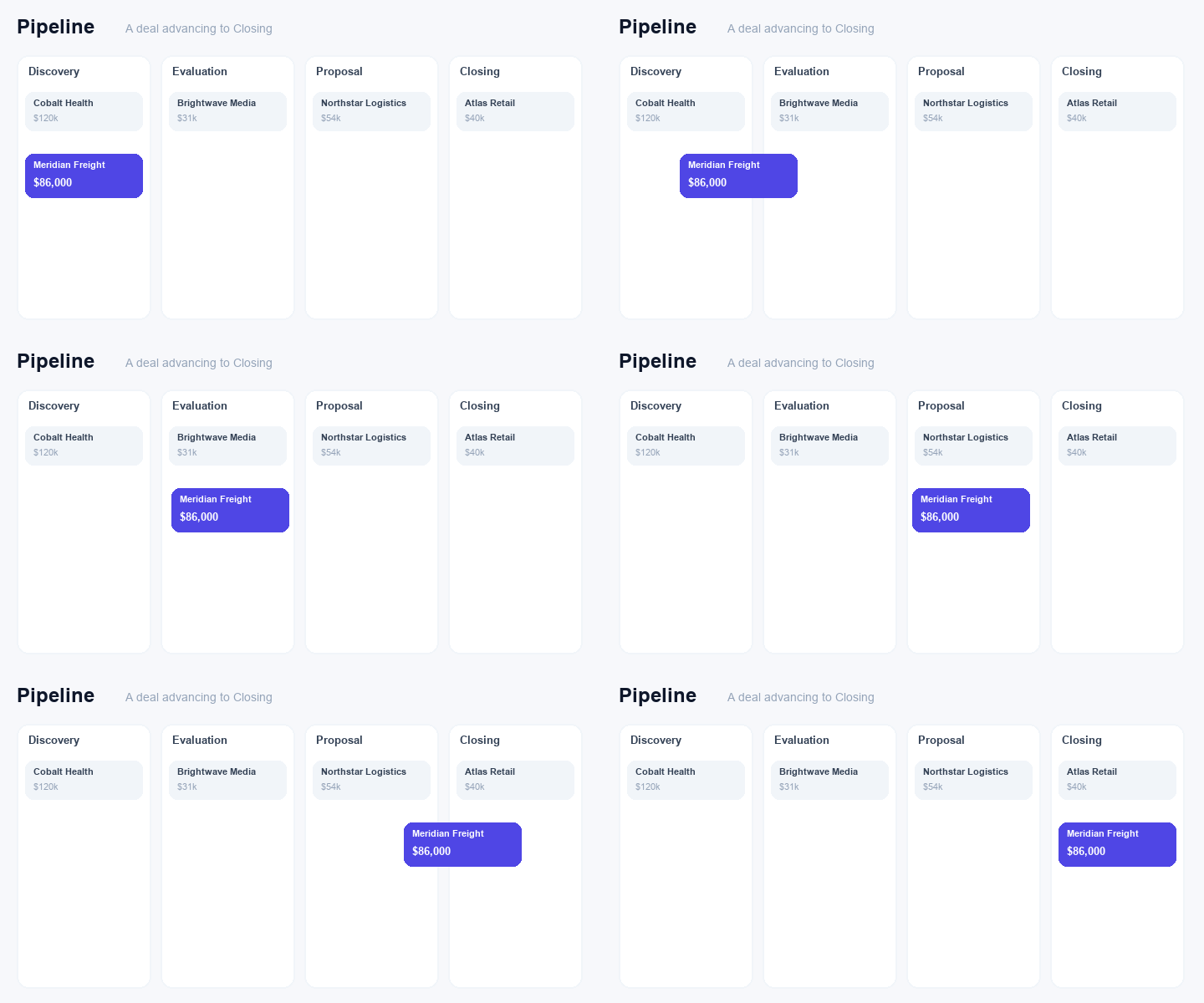
What the data says
What Dealbase does
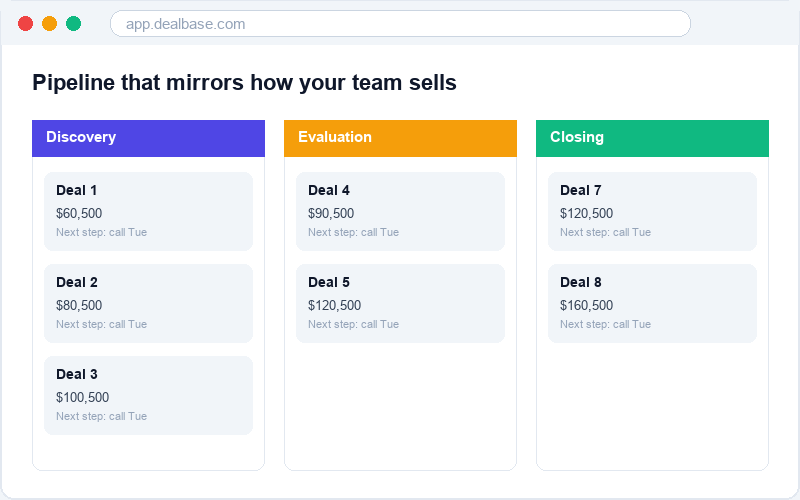
Pipeline management
A kanban pipeline with customizable stages, deal rotting alerts and next-step tracking on every card. See the product.
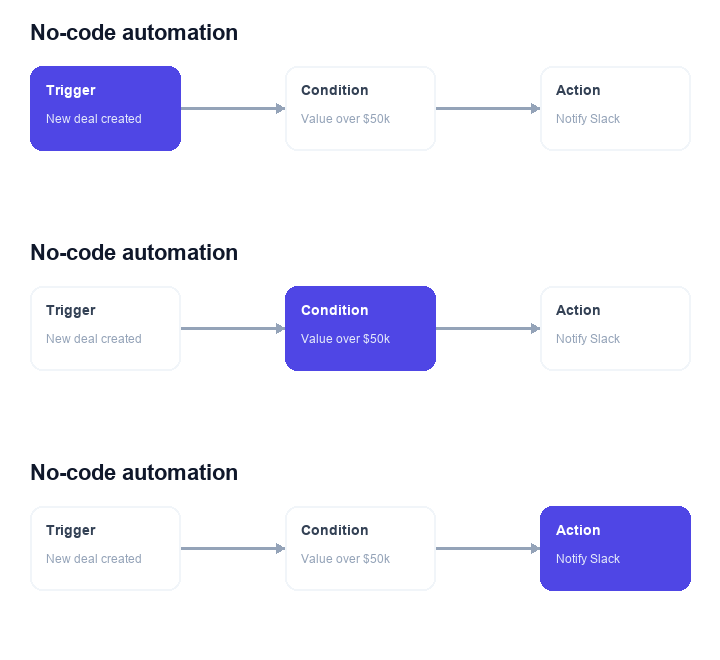
Workflow automation
A no-code builder with triggers, conditions and actions, plus 40 ready-made templates for routing, follow-ups and handoffs.
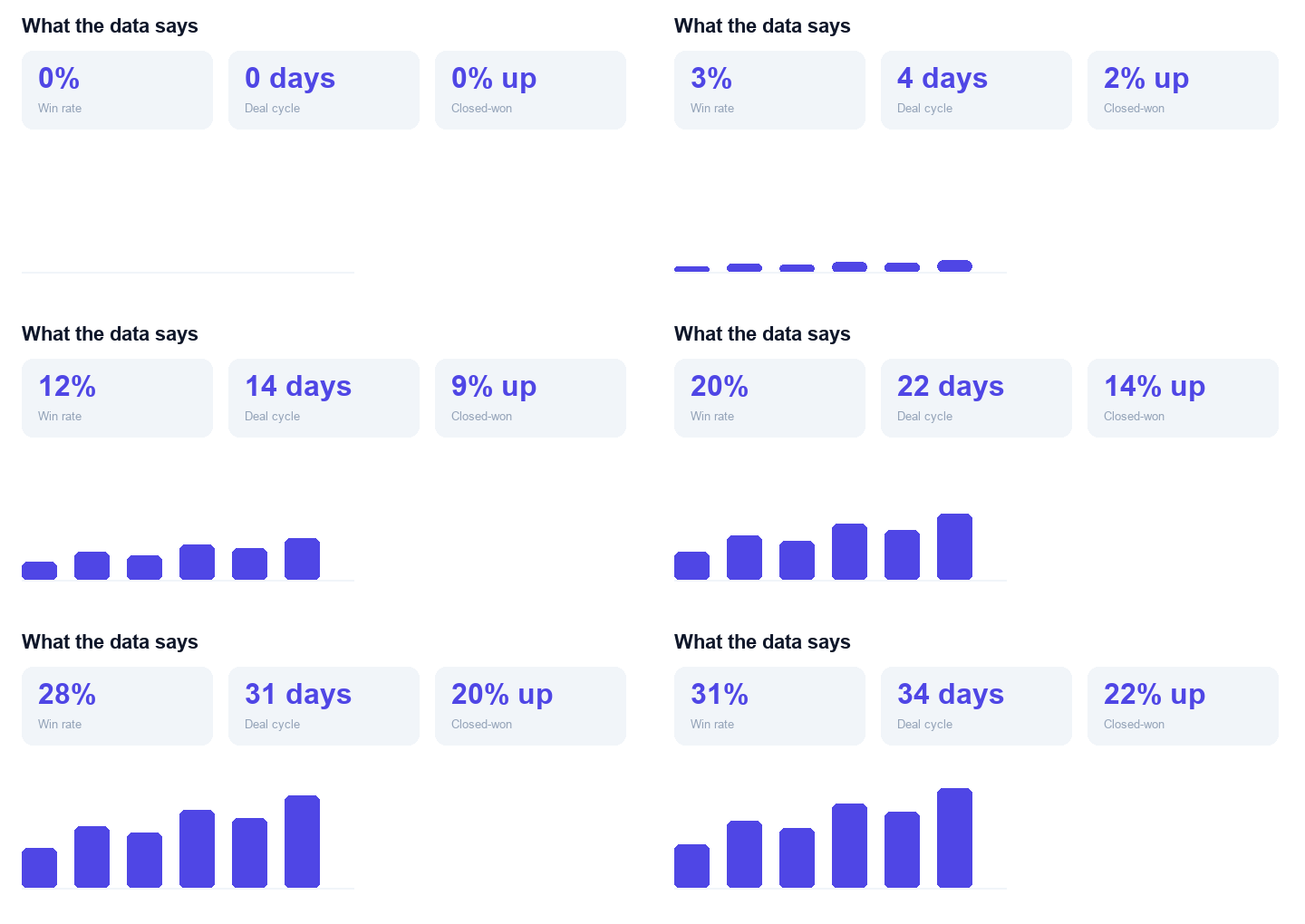
Revenue analytics
Win rate, cycle time and forecast reports that answer the questions your Monday pipeline review actually asks.
"We replaced two tools and a wall of spreadsheets with Dealbase. Deal cycles dropped 31% in two quarters and my forecast calls stopped being guesswork." Maya Krishnan, VP Sales, Meridian Freight
Product demo, 90 seconds
Read the video transcript
The demo opens on the Dealbase pipeline board. Deals sit in three stages: Discovery, Evaluation and Closing. A deal card for Meridian Freight, worth $86,000, moves from Discovery through Evaluation to Closing as the rep updates the next step. The final scene shows the quarter results dashboard: closed-won revenue by month from January through June, with win rate up 4 points this quarter. Every chart in the demo is a live report available on the Growth plan.
How Dealbase compares to other CRM categories
Enterprise CRM suites offer the deepest customization on the market, and that depth usually needs a dedicated admin. Dealbase ships opinionated defaults so a 10 to 200 seat team is live in days without one. All-in-one platforms bundle marketing, content and service tools into one suite; Dealbase is sales-only, which keeps the product and the price focused on pipeline work. Full details in the FAQ.
See your pipeline clearly by Friday
14-day free trial, no credit card. Guided CSV import from any spreadsheet or CRM.
Start the trialMeasured results across the customer base
- 23% more closed-won revenue for teams that update deal stages weekly, from the Dealbase Pipeline Benchmark report (2025), a survey of 412 sales teams.
- 31% faster deal cycles at Meridian Freight within two quarters, from the Dealbase Pipeline Benchmark report (2025), a survey of 412 sales teams.
- 64% of reps update every open deal weekly once rotting alerts are on, from the Dealbase product telemetry report (2025), measured across around 1,200 customer accounts.
- 2.8x more next steps recorded per deal than before adoption, from the Dealbase product telemetry report (2025), measured across around 1,200 customer accounts.
- 38% fewer deals stall past 30 days when alerts fire at 14 days, from the Dealbase product telemetry report (2025), measured across around 1,200 customer accounts.
- 19% median win-rate lift for teams running weekly pipeline reviews, from the Dealbase Pipeline Benchmark report (2025), a survey of 412 sales teams.
- 74% of new accounts finish CSV import inside the first week, from the Dealbase product telemetry report (2025), measured across around 1,200 customer accounts.
- 12% of pipeline value on average sits in deals with no next step, from the Dealbase Pipeline Benchmark report (2025), a survey of 412 sales teams.
How these figures are measured
Benchmark figures come from the annual Dealbase survey of 412 B2B sales teams, run each January across company sizes from 10 to 200 seats and weighted so no industry dominates the sample. Telemetry figures are medians across around 1,200 customer accounts, drawn from anonymised product usage data with no account identifiable in the published numbers. Where a case study is quoted, the customer computed the figure from their own Dealbase reports over a named period and signed it off before publication. Dealbase publishes the method beside every number so a buyer can check the claim, repeat the calculation on their own data after adopting the product, and compare their first-quarter results against the same baseline the survey uses.
How mid-market teams run Dealbase
A team of 10 to 200 seats typically starts with the pipeline board and the guided import, brings in email sync during the first week, and turns on automation in the second. The Monday pipeline review runs off two reports: deals with no next step, and deals sitting in one stage past fourteen days. Sales operations owns stage definitions and the automation library, reps own the next step on every card, and finance reads the forecast report directly, so the numbers in the Friday call and the numbers in the CRM are the same numbers.
What changes in the first quarter
Across the customer base the first visible change is hygiene. Reps stop keeping shadow spreadsheets because the board answers faster, stage definitions stop drifting because they are written next to the stage, and the forecast stops moving on the last day of the month because rotting deals were flagged three weeks earlier.
Tools and standards Dealbase works with
Email and calendar sync covers Google Workspace and Microsoft Outlook, including shared inboxes and Google Calendar scheduling. Notifications post to Slack channels and Microsoft Teams. Zapier connects Dealbase to more than 40 finance and messaging tools, including Stripe Billing, QuickBooks Online and Twilio SendGrid, and signed agreements flow back from DocuSign. Recordings from Zoom Meetings attach to the deal timeline. The REST API and webhooks run on OAuth 2.0, data is encrypted with TLS 1.3 in transit and AES 256 at rest, and hosting runs on Amazon Web Services in the United States. Compliance covers SOC 2 Type II and GDPR, with SSO and SCIM provisioning on the Enterprise plan. Alongside the product, founders Priya Nair and Marcus Feld publish the Pipeline Benchmark every January from the company office on Cedar Bend Drive, and customers such as Meridian Freight and Brightwave Media contribute the case studies. Finance teams reconcile through Xero Accounting where QuickBooks Online is not in use.