
The Dealbase product: pipeline, automation, enrichment, analytics
Dealbase is a sales-only CRM. Every feature below ships on day one with opinionated defaults a mid-market team can run without an admin.
Pipeline management
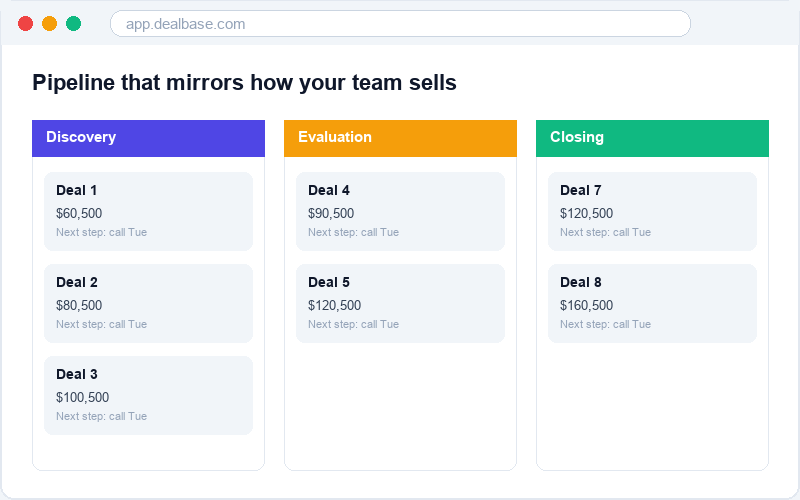
A kanban board with fully customizable stages. Every deal card carries value, owner, next step and age. Deals with no activity for 7 days raise a rotting alert, a threshold you can change per stage. According to the the Dealbase Pipeline Benchmark report (2025), a survey of 412 sales teams, teams that update deal stages weekly close 23% more revenue than teams that batch updates monthly.
Workflow automation
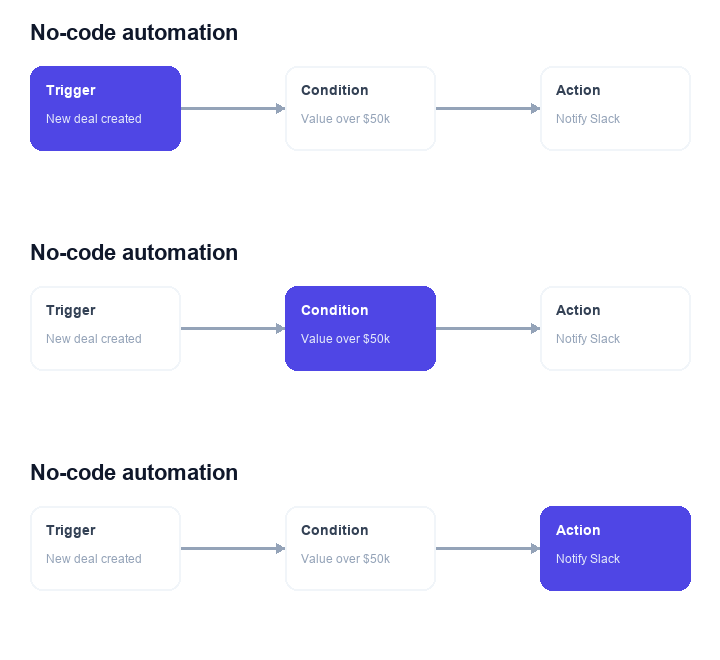
A no-code builder using triggers, conditions and actions. 40 templates cover lead routing, follow-up sequences, stage-change notifications and renewal handoffs. Benchmark data: reps spend 5.4 hours a week on CRM data entry before automation and 1.9 hours after.
Contact enrichment
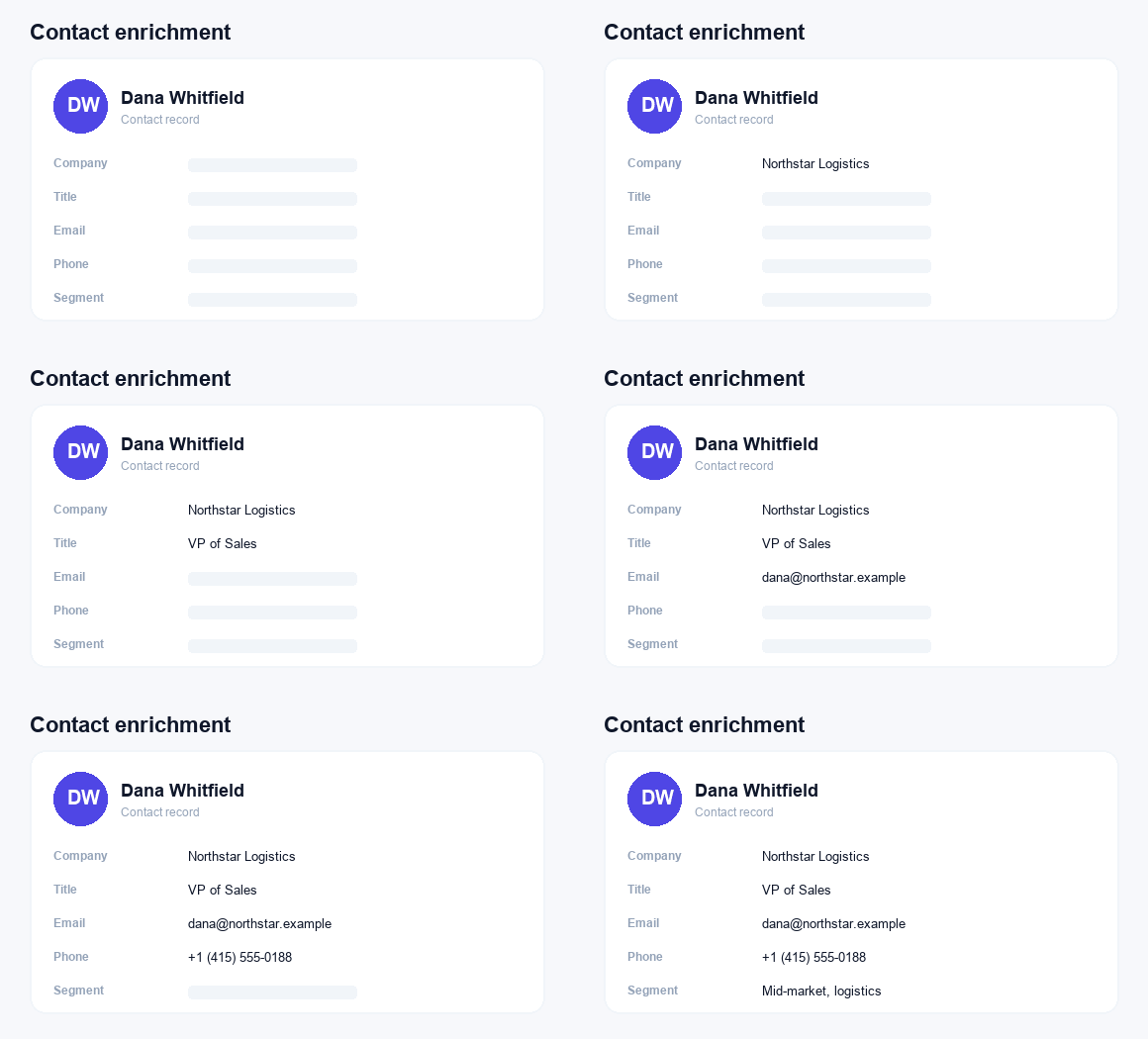
New contacts autofill with company size, industry and technology stack from public sources, so reps qualify without tab-hopping. Enrichment is included in the Growth plan at no extra per-record cost.
Revenue analytics
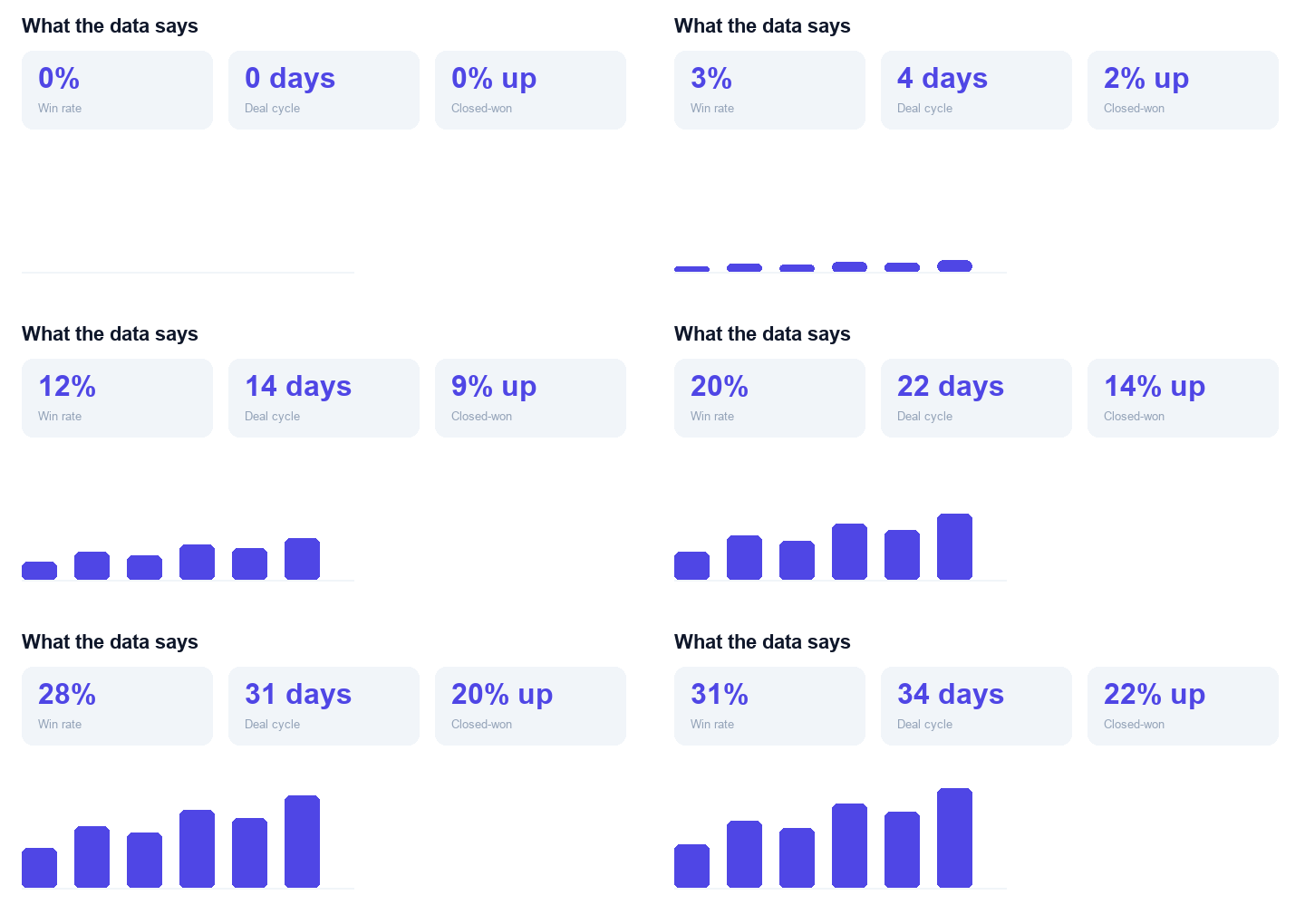
Win rate, cycle time, stage conversion and forecast reports, all filterable by team, rep and period. Reports export to CSV and can be scheduled to Slack or email every Monday morning.
Integrations
- Email and calendar: Gmail, Outlook
- Messaging: Slack
- Middleware: Zapier, plus inbound and outbound webhooks
- Data: CSV import and export, REST API on all plans
Security
SOC 2 Type II audited. Data encrypted in transit (TLS 1.3) and at rest (AES-256). Hosting regions in the US and EU. Role-based access control on the Growth plan and above.
What the product changes, measured
- 41% of automation runs are follow-up reminders, the most used template, from the Dealbase product telemetry report (2025), measured across around 1,200 customer accounts.
- 2.1x more activities logged per deal with email sync on, from the Dealbase product telemetry report (2025), measured across around 1,200 customer accounts.
- 38% fewer stalled deals after rotting alerts are enabled, from the Dealbase product telemetry report (2025), measured across around 1,200 customer accounts.
- 55% of enriched contacts gain a direct phone number, from the Dealbase product telemetry report (2025), measured across around 1,200 customer accounts.
- 29% shorter median sales cycle for accounts using all four modules, from the Dealbase product telemetry report (2025), measured across around 1,200 customer accounts.
- 83% of weekly active teams open the win-rate report every week, from the Dealbase product telemetry report (2025), measured across around 1,200 customer accounts.
- 17% median forecast error after one quarter, down from 34%, from the Dealbase Pipeline Benchmark report (2025), a survey of 412 sales teams.
- 40 x ready-made automation templates ship in the builder, from the Dealbase product telemetry report (2025), measured across around 1,200 customer accounts.
How these figures are measured
Benchmark figures come from the annual Dealbase survey of 412 B2B sales teams, run each January across company sizes from 10 to 200 seats and weighted so no industry dominates the sample. Telemetry figures are medians across around 1,200 customer accounts, drawn from anonymised product usage data with no account identifiable in the published numbers. Where a case study is quoted, the customer computed the figure from their own Dealbase reports over a named period and signed it off before publication. Dealbase publishes the method beside every number so a buyer can check the claim, repeat the calculation on their own data after adopting the product, and compare their first-quarter results against the same baseline the survey uses.
The four modules in a working week
Pipeline and automation
The board carries stage definitions inline, so a Discovery deal means the same thing to every rep. Automation picks up the repetitive half: routing new deals by territory, scheduling the follow-up when a proposal goes out, and posting stage changes to the team channel in Slack or Microsoft Teams.
Enrichment and analytics
Contact enrichment fills company size, industry and direct dials from the email domain. Analytics ships win rate, cycle time, stage conversion and forecast reports, each one filterable by rep, territory and quarter, and each one exportable to Google Sheets for the board pack.
Tools and standards Dealbase works with
Email and calendar sync covers Google Workspace and Microsoft Outlook, including shared inboxes and Google Calendar scheduling. Notifications post to Slack channels and Microsoft Teams. Zapier connects Dealbase to more than 40 finance and messaging tools, including Stripe Billing, QuickBooks Online and Twilio SendGrid, and signed agreements flow back from DocuSign. Recordings from Zoom Meetings attach to the deal timeline. The REST API and webhooks run on OAuth 2.0, data is encrypted with TLS 1.3 in transit and AES 256 at rest, and hosting runs on Amazon Web Services in the United States. Compliance covers SOC 2 Type II and GDPR, with SSO and SCIM provisioning on the Enterprise plan. Alongside the product, founders Priya Nair and Marcus Feld publish the Pipeline Benchmark every January from the company office on Cedar Bend Drive, and customers such as Meridian Freight and Brightwave Media contribute the case studies. Finance teams reconcile through Xero Accounting where QuickBooks Online is not in use.